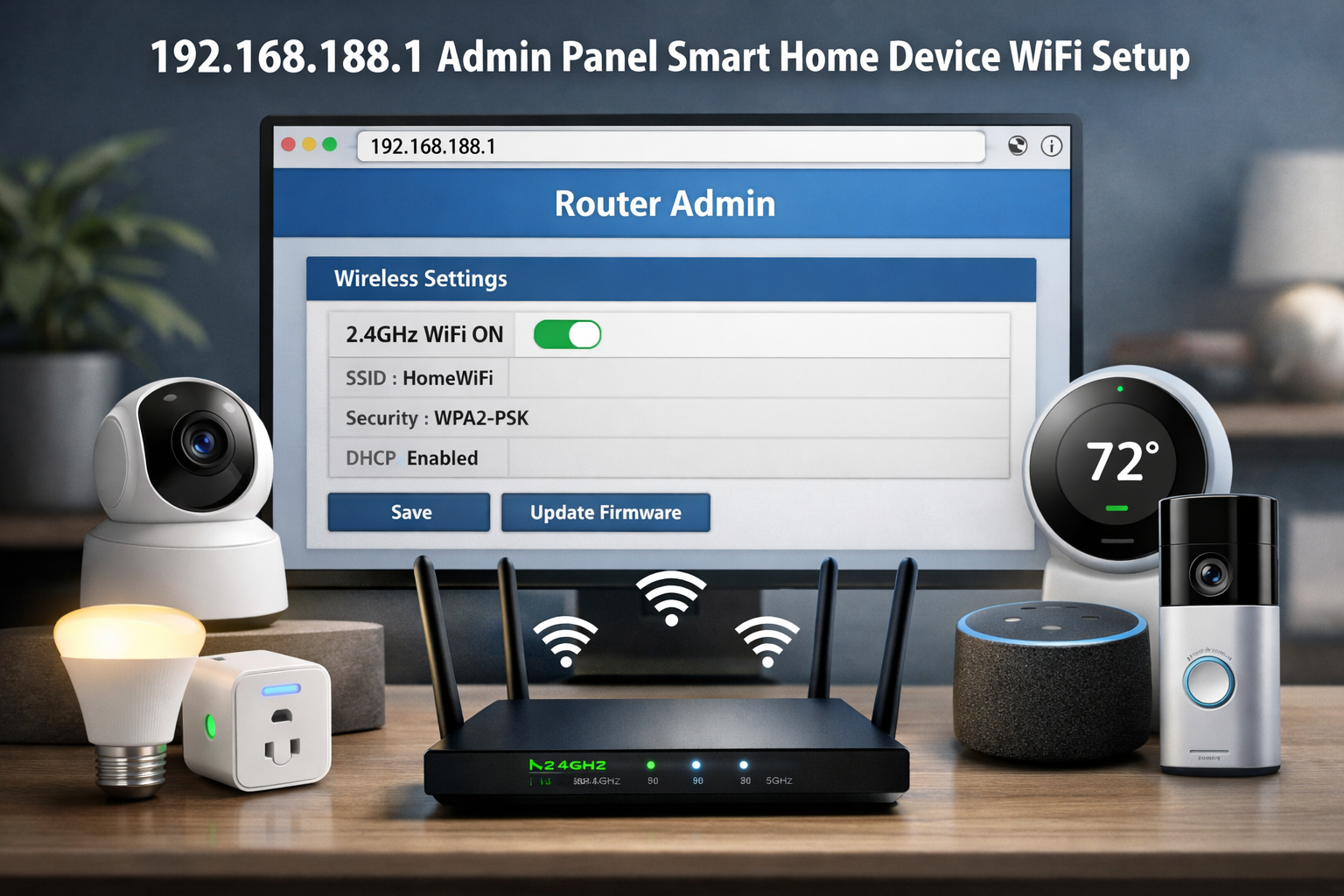
Smart home devices like smart lights, WiFi cameras, smart plugs, thermostats, and voice assistants make life easier—but only when they connect properly to your WiFi network. Many users face issues such as devices not connecting, frequent disconnections, or apps failing to detect smart devices. In most cases, the real problem lies in incorrect router settings. Using the 192.168.188.1 admin panel, you can easily configure your router to ensure smooth and stable connectivity for all smart home devices.
Can I connect smart home devices using 192.168.188.1?
Yes. You can configure router settings such as enabling 2.4GHz WiFi, adjusting security mode, and managing DHCP through the 192.168.188.1 admin panel to connect smart home devices smoothly and securely.
Why Smart Home Devices Need Router Configuration
Most smart home devices depend on a stable WiFi connection. If router settings are not optimized, users may face:
- Smart devices not connecting to WiFi
- Devices going offline frequently
- Slow response or app connection errors
Configuring your router via 192.168.188.1 helps prevent these issues and improves overall performance.
What Is 192.168.188.1 Admin Panel?
192.168.188.1 is a local IP address that allows users to access their router or WiFi extender’s admin dashboard. From this panel, you can:
- Manage WiFi bands (2.4GHz & 5GHz)
- Change security and password settings
- Monitor connected devices
- Optimize network performance for smart devices
Smart Home Devices You Can Set Up Using 192.168.188.1
You can configure WiFi for:
- Smart LED lights
- Smart plugs & switches
- WiFi security cameras
- Smart doorbells
- Smart thermostats
- Alexa & Google Home devices
Most of these devices require 2.4GHz WiFi, which must be enabled manually.
Step-by-Step: Set Up Smart Home Devices Using 192.168.188.1
Step 1: Login to 192.168.188.1
- Connect your phone or laptop to the router WiFi
- Open any web browser
- Enter http://192.168.188.1 in the address bar
- Log in using your router’s admin credentials
If login fails, refer to our 192.168.188.1 login guide to fix browser or IP issues.
Step 2: Enable 2.4GHz WiFi
Most smart devices do not support 5GHz WiFi.
- Go to Wireless Settings
- Enable 4GHz band
- Keep SSID name simple (no symbols)
This step alone resolves the majority of smart device connection problems.
Step 3: Disable Band Steering
Band steering automatically switches devices between bands, which can confuse smart devices.
- Open Advanced Wireless Settings
- Disable Band Steering / Smart Connect
- Save changes
Step 4: Choose the Right WiFi Security Settings
Recommended configuration:
- Security Mode: WPA2-PSK or WPA2/WPA3 mixed
- Avoid WPA3-only mode for older devices
- Use a strong but simple WiFi password
For better protection, update your WiFi security settings before adding smart devices.
Step 5: Update Router Firmware
Outdated firmware can cause compatibility issues.
- Open Firmware Update section
- Check for updates
- Restart router after update
Follow our complete router firmware update guide for safe updating.
Best Router Settings for Smart Homes (2026)
For long-term performance:
- Use a separate SSID for smart devices
- Set 2.4GHz channel width to 20MHz
- Keep router firmware updated
- Enable DHCP for automatic IP assignment
These settings reduce disconnections and improve stability.
Common Smart Home WiFi Problems & Fixes
Smart device not connecting
✔ Enable 2.4GHz WiFi
✔ Disable band steering
✔ Reset device and retry
Device disconnects frequently
✔ Reduce distance from router
✔ Avoid crowded WiFi channels
✔ Use a wireless extender setup for better coverage
Admin page not loading
If the router page does not open, check our detailed guide on 192.168.188.1 not working.
Is It Safe to Use 192.168.188.1 for Smart Devices?
Yes.
192.168.188.1 is a local admin IP, accessible only within your network. For safety:
- Change default admin password
- Use WPA2/WPA3 encryption
This keeps your smart home network secure.
Frequently Asked Questions
Can smart home devices work on 5GHz WiFi?
Most smart home devices work best on 2.4GHz WiFi due to better range and compatibility.
Why are my smart devices not connecting to WiFi?
Disabled 2.4GHz WiFi, incorrect security settings, or outdated firmware are common causes.
Is 192.168.188.1 safe for router configuration?
Yes, it is a secure local IP used to manage router and extender settings.
Final Thoughts
Smart home devices perform best when your router is configured correctly. Using the 192.168.188.1 admin panel, you can fix connection issues, improve stability, and create a secure smart home network for 2026 and beyond.